
Last Updated: October 26, 2026
Quick Summary
To prevent workwear shrinkage, wash in cold water (60°F or below), use a gentle or normal cycle, and air dry whenever possible. Heat and agitation cause fibers to contract, so keeping temperatures low and choosing gentler wash settings protects your garments from shrinking with repeated laundering.
- Read the care label before washing to check fiber content, preshrunk status, and temperature limits.
- Wash 100% cotton in cold water; cotton-polyester blends can handle cool water up to 85°F.
- Air drying is safest; if using a dryer, use low heat only and remove clothes promptly.
- Turn garments inside out and sort by color and fabric type before washing.
- Avoid fabric softener on performance workwear as it can reduce moisture management and protective finishes.
Table of Contents
- Why Workwear Shrinks and What It Costs You
- Check Workwear Care Label Instructions Before Your First Wash
- Best Water Temperature for Washing Work Clothes
- Sort, Prepare, and Protect Your Garments Before Washing
- Choose the Right Wash Cycle and Detergent
- How to Dry Work Clothes Without Shrinking
- How to Keep Work Pants from Shrinking During Repeated Washing
- Preventing Shrinkage Before Your First Wash
- Frequently Asked Questions
Why Workwear Shrinks and What It Costs You
Workwear shrinks because heat and agitation break down fibers.
This isn't just annoying. It's expensive.
Shrunken work clothes restrict movement and pull at the shoulders, making you uncomfortable, less productive, and more injury-prone.
The good news: you can prevent workwear shrinkage with the right approach. It starts before your first wash.
Whether clothing shrinks or holds its shape comes down to how you treat it from day one.
Check Workwear Care Label Instructions Before Your First Wash
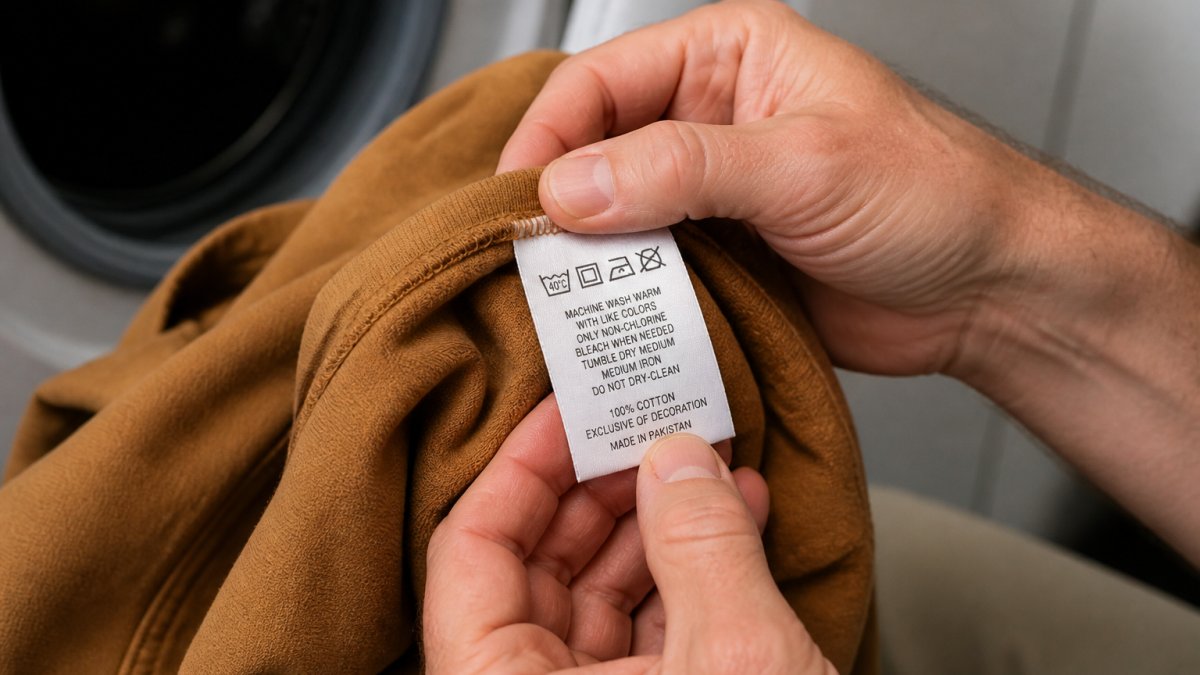
Your care label is your roadmap. You can see how preshrunk cotton tees display these care label details.
Look for these key details:
- Fiber content: Cotton shrinks more than polyester blends. A 100% cotton shirt behaves differently than a 60% cotton, 40% polyester blend.
- Preshrunk label: If it says "preshrunk," the manufacturer already ran the garment through heat and moisture to shrink it before it reached you. This means less shrinkage risk during home washing.
- Temperature guidance: The label tells you the maximum safe water temperature. Respect that limit.
The Federal Trade Commission's guide to care labeling requires manufacturers to provide accurate care instructions. That label exists to help you keep your gear in shape.
When you skip the label, you're guessing. Guessing leads to shrinkage.
Best Water Temperature for Washing Work Clothes
Cold water is the default for preventing shrinkage, but workwear is not one fabric. The right temperature depends on fiber content, finish, and construction, and a blanket "wash everything cold" rule ignores the care limits built into treated fabrics.
Start with the fiber, then set the temperature
Heat drives shrinkage by relaxing built-in fiber tension and letting fibers contract as the garment dries. Fabrics respond differently:
- 100% cotton (tees, canvas pants, coveralls): The highest shrinkage risk. Cotton fibers swell and contract with heat and moisture. Use cold water (60°F or below) for routine washes. Expect the most movement in the first two or three washes even on preshrunk goods.
- Cotton-polyester blends (common in uniform shirts and pants): Polyester is heat-set and dimensionally stable, so blends shrink less than pure cotton. Cold or cool water (up to about 85°F) is usually safe, but keep dryer heat low because polyester can distort at high temperatures even when it does not shrink like cotton.
- Denim and heavy canvas: Cold water reduces shrinkage and indigo loss. Turn jeans and canvas work pants inside out and avoid hot washes, which accelerate both shrinkage and fading.
Practical temperature settings
- Cold (60°F or below): Default for everyday workwear, cotton, blends, denim, and any garment with a protective finish. Prevents most shrinkage and preserves color.
- Warm (85-105°F): Reserve for heavily soiled gear whose label allows it, or for oily soils that cold water struggles to lift. Accept a slightly higher shrinkage risk and air dry afterward.
- Hot (above 130°F): Avoid unless the care label explicitly permits it. Hot water maximizes shrinkage, fades dyes, and can degrade elastic and reflective trim.
Most modern detergents work in cold water, so temperature rarely explains dirty clothes. For soil, a presoak or longer cycle does more than hot water with far less shrinkage risk.
What repeated washing does over time
Workwear is washed far more often than casual clothing, and shrinkage compounds: a garment losing a little length each wash becomes noticeably short after a season.
The Federal Trade Commission's guide to care labeling explains that care instructions reflect the manufacturer's tested limits. Treat the label's temperature as a ceiling, not a target.
Water temperature affects shrinkage differently depending on what your workwear is made from.
| Fabric Type | Recommended Temperature | Key Consideration |
|---|---|---|
| 100% cotton | Cold (60°F or below) | Highest shrinkage risk; expect movement in first 2-3 washes |
| Cotton-polyester blends | Cold or cool (up to 85°F) | Polyester is heat-set; keep dryer heat low |
| Denim and heavy canvas | Cold water | Turn inside out; avoid hot washes to reduce shrinkage and fading |
| Treated and performance fabrics | Follow care label exactly | Hot water can damage finishes and reduce protective performance |
Sort, Prepare, and Protect Your Garments Before Washing
What you do before the wash cycle starts determines whether your clothes shrink or hold their shape.
Sort by color and fabric type
Separate your workwear into groups. This protects both the garments and your wash results.
Sort by:
- Color: Dark workwear (navy, black, dark green) washes separately from light colors (gray, tan). Darker dyes can bleed onto lighter fabrics, especially on the first few washes.
- Fabric type: Denim and heavy cotton wash differently than cotton blends. Heavier fabrics need more agitation; blends need less. Wash them separately.
- Soil level: Extremely dirty work clothes (caked mud, grease) might need a quick presoak or separate wash. This prevents dirt from transferring to less soiled items.
Sorting takes five minutes and ensures each load gets the right wash settings.
Turn garments inside out
Turning clothes inside out protects the outer surface and reduces fading:
- The outer surface doesn't rub against the washer drum as much
- Colors fade more slowly
- Logos, graphics, and worn areas get less agitation
It takes seconds before loading the washer.
Don't overload the washer
Overloaded washers don't rinse clothes completely, create excessive agitation and friction, and don't distribute heat evenly, leading to wrinkles and shrinkage. Fill the washer about three-quarters full so the load feels loose, not packed.
Choose the Right Wash Cycle and Detergent
The wash cycle controls agitation, the second half of the shrinkage equation after heat. Detergent chemistry matters too: the wrong formula can strip finishes, stiffen fabric, or shorten the life of elastic and reflective trim.
Match the cycle to the garment, not the dirt
- Gentle or delicate: Best for cotton blends, uniform shirts, and any garment with a protective finish. Lower spin speeds reduce fiber stress and friction.
- Normal: Appropriate for everyday work pants and denim that are not heavily soiled. Moderate agitation cleans well without the wear of a heavy cycle.
- Heavy-duty: Reserve for rare deep cleans of canvas or mud-caked gear. Frequent use accelerates surface wear and shrinkage.
Choose the gentlest cycle that removes the soil. If a normal cycle leaves dirt behind, presoak or pretreat rather than escalating to heavy-duty agitation.
Detergent choices that protect workwear
- Use a mild, dye-free liquid detergent for routine washing. Liquids dissolve more readily in cold water and rinse out of dense fabrics more completely than powders.
- Skip fabric softener on performance workwear. Softeners coat fibers and can reduce moisture management, flame resistance, and water repellency. They also build up on cotton and can make towels and tees feel stiff over time.
- Avoid chlorine bleach on colored or treated garments. It weakens cotton fibers and strips finishes. Use oxygen-based bleach only when the care label allows it.
How construction affects the right settings
Workwear has seams, bar tacks, reinforced knees, and sometimes reflective tape or elastic waistbands, and high agitation stresses those points first. Turning garments inside out, closing zippers, and fastening hook-and-loop closures protects both garment and drum. For flame-resistant and high-visibility garments, follow the manufacturer's detergent instructions and avoid anything that could leave a flammable residue or dull reflective tape.
Build a wash routine that limits cumulative wear
Frequent laundering is the reality of workwear, so design the routine around repetition:
- Spot-clean and air out garments between shifts to extend time between full washes.
- Wash similar fabrics together so each load gets one appropriate cycle.
- Use cold water and a gentle or normal cycle as the default.
- Air dry or use low dryer heat.
- Check fit and condition periodically, and retire garments that have shrunk out of coverage or lost protective function.
How to Dry Work Clothes Without Shrinking
The dryer is where most shrinkage happens, so your drying method matters as much as how you wash.
Air drying is the safest option. Hang work clothes on a clothesline or drying rack in a well-ventilated space to eliminate heat exposure and shrinkage risk entirely.
If you use a dryer, follow these rules:
- Low heat only: Set the dryer to low or medium heat, never high. High heat causes rapid shrinkage, especially in cotton.
- Remove items promptly: Take clothes out as soon as the cycle ends. Leaving them in the warm dryer extends heat exposure.
- Shorter cycles: Run shorter drying cycles. Check clothes halfway through. You might not need the full cycle.
High dryer heat causes more shrinkage than the wash cycle; heat plus tumbling tightens fibers permanently.
How to Keep Work Pants from Shrinking During Repeated Washing
Work pants get washed frequently, and small amounts of shrinkage add up until they're unwearable, so learning how to prevent workwear shrinkage matters. Prevent cumulative shrinkage with these practices:
- Wash in cold water every time. Never use warm or hot water for routine washing. Save heat for occasional deep cleans only.
- Use a gentle cycle consistently. Your pants don't need heavy agitation. Gentle cycles clean just as well.
- Air dry when possible. If you must use a dryer, keep it on low heat and remove pants while slightly damp.
A pair of pants that shrinks 2% per wash becomes noticeably tight after five or six washes, so prevent it from the start with cold water and gentle cycles.
Proper care keeps work pants fitting right and lasting through years of hard use.
Preventing Shrinkage Before Your First Wash
Your first wash sets the pattern for the garment's entire lifespan. Before washing new workwear:
- Read the care label completely. Understand the fiber content and preshrunk status. A preshrunk garment has already gone through the shrinkage process and won't shrink as much in future washes. The BD Cowboy Skull crew demonstrates this preshrinking benefit.
- Check the fit. Try on the garment and note how it feels. If it's snug, be extra cautious with heat and agitation.
- Wash separately. The first wash can release dyes and loose fibers. Wash new workwear alone or with similar colors.
Treat new workwear gently from the beginning and it stays in shape; throw it in hot water on a heavy cycle and you've set it up to shrink. The BD Branded Tee shows how preshrinking helps prevent future shrinkage.
Consumer Reports' guidance on preventing fabric shrinkage emphasizes that prevention starts before the first wash. Manufacturers preshrink many garments, but home care determines whether that benefit is preserved.
Frequently Asked Questions
How do you wash work clothes without shrinking them?
Wash work clothes in cold water on a gentle or delicate cycle to prevent workwear shrinkage. Turn garments inside out before washing, use a mild detergent suited to the fabric, and avoid overloading the washer. Always check the care label first, some fabrics require specific instructions. Air drying or using low heat in the dryer is critical; high heat is the leading cause of shrinkage in cotton and cotton-blend garments.
What water temperature helps prevent workwear from shrinking?
Cold water (below 60°F) is ideal for preventing shrinkage in most work clothes. Warm or hot water can cause cotton and cotton-blend fabrics to shrink significantly, especially on the first few washes. Cold water also protects color and fabric integrity, making it the best choice for durable workwear. If your care label permits warm water, keep it below 80°F and reserve it only for heavily soiled garments.
Does putting work clothes in the dryer make them shrink?
Yes, high dryer heat is one of the fastest ways to shrink work clothes. Cotton and cotton-blend garments shrink most when exposed to temperatures above 130°F. Use low or medium heat settings, or air dry whenever possible. Hang drying or laying garments flat eliminates heat-related shrinkage entirely and extends the life of protective coatings and durable finishes on workwear.
Can you prevent workwear from shrinking after it has already shrunk?
Once fibers have shrunk, reversing the damage is extremely difficult. Prevention is far more effective than correction. However, you can minimize further shrinkage by storing garments properly, washing infrequently in cold water, and air drying. If significant shrinkage has already occurred, resizing or tailoring may be your only option. This underscores why following care instructions from the start protects your investment in quality work clothes.
Workwear shrinkage is preventable. It requires attention to care labels, cold water, gentle cycles, and smart drying choices. The effort you invest in the first wash pays dividends across the life of the garment. At Buckle Down, we design our workwear to withstand the demands of hard labor. Proper care ensures it holds its shape, maintains its fit, and keeps performing when you need it most. Start with cold water, use a gentle cycle, and air dry when possible, your gear will thank you.
